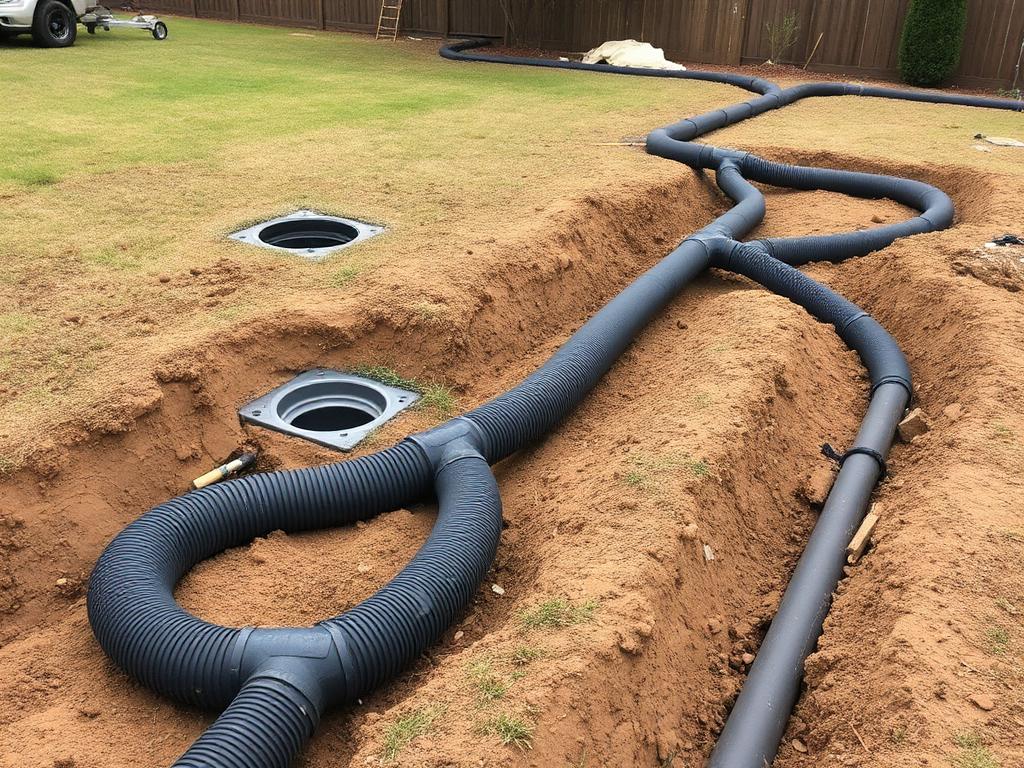
Standing water isn't just a yard problem — it threatens foundations, kills pasture, undermines driveways, and quietly drops your property value. Most failed drainage we get called to fix was installed without slope verification, without proper aggregate, or without a real outlet.
There is no single 'best' drainage system. The right answer depends on your soil, your slope, where the water is coming from, where it can legally go, and how much surface area you have to work with. Some sites need a French drain. Others need an infiltrator field, a dry well, or a connected collector system tying gutters, yard drains, and downspouts into one network. Many sites need a combination.
We map the elevation across your property with a laser level, perc-test the soil where it matters, and walk you through the options before a shovel hits the ground. Whatever system we recommend gets installed with the right pipe, the right stone, the right fabric, and a daylight or storage outlet that actually works — not into the neighbor's lot.
Systems we install
Four drainage approaches we install — and how we help you pick.
Not sure which one fits your property? That's our job. We walk the site with you, look at the soil and the slope, and recommend the system — or combination of systems — that actually solves the problem. No upsell, no guesswork.
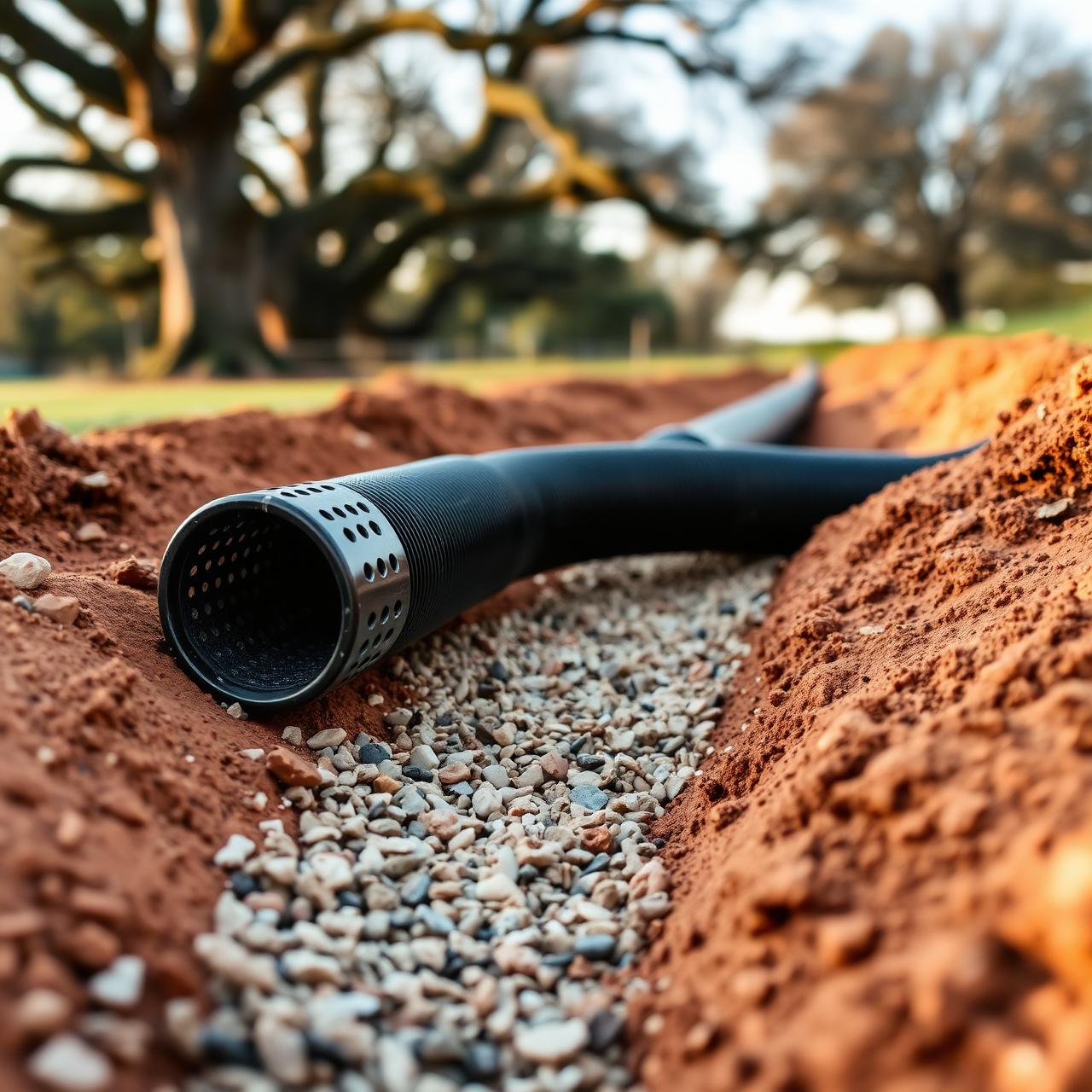
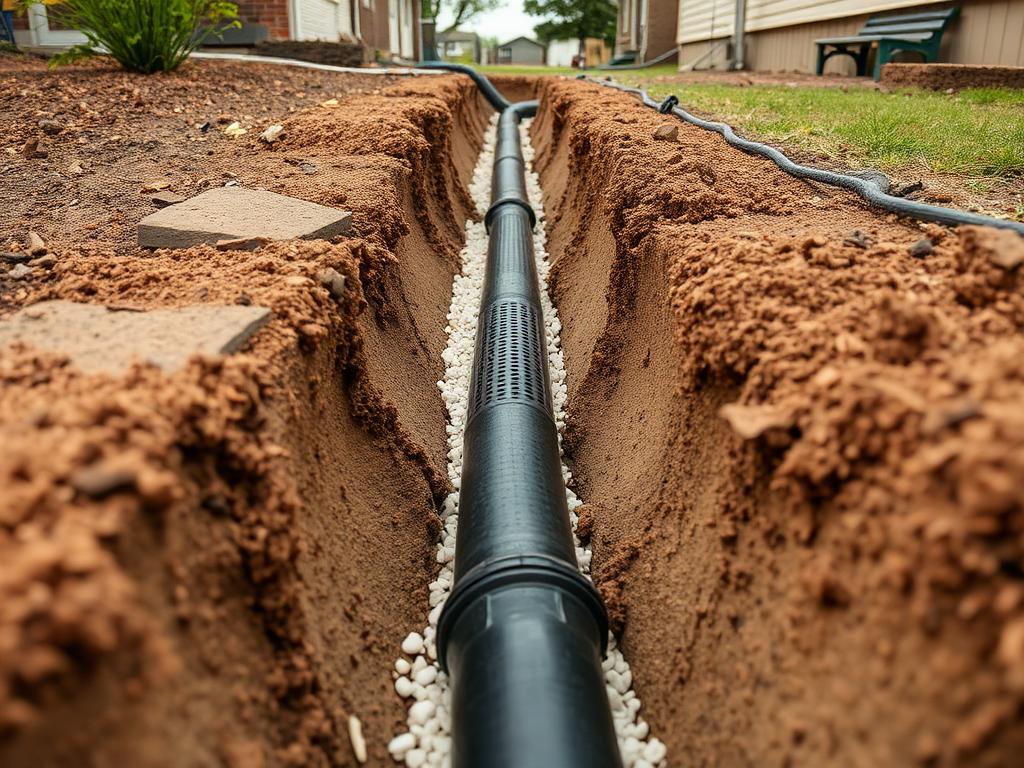
French drains
Best for: Saturated lawns, footing drains, hillside seepage
Perforated pipe bedded in washed #57 stone, wrapped in non-woven fabric, sloped to a daylight outlet. The workhorse for moving subsurface water off your lot when there's somewhere lower to send it.
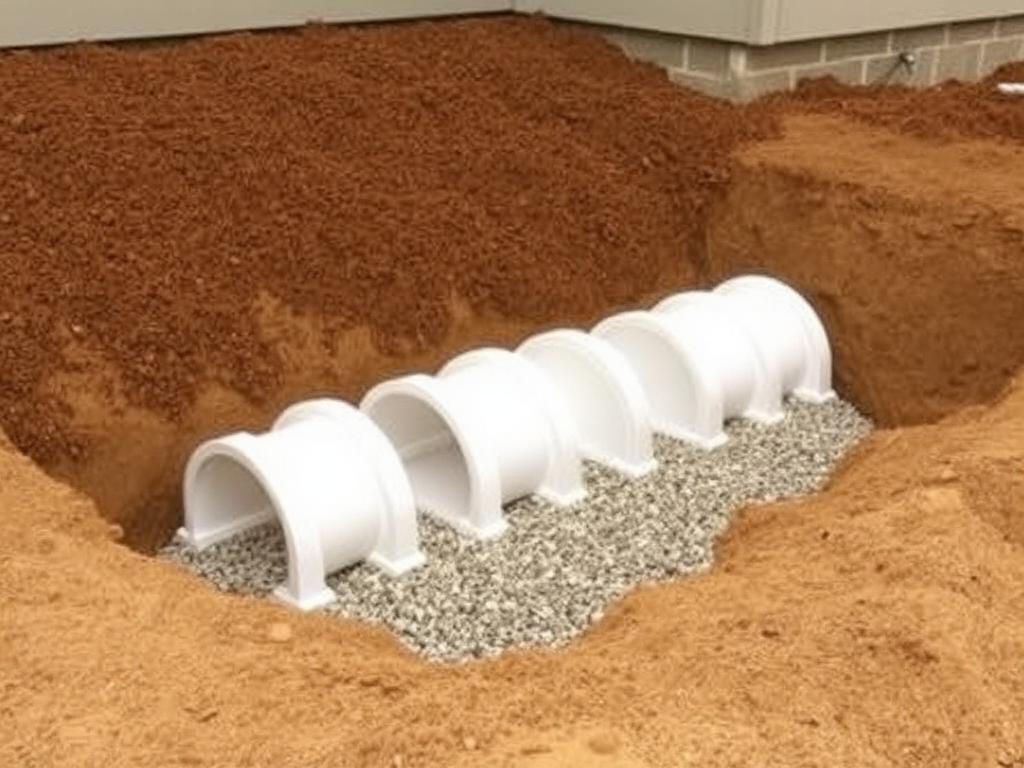
Infiltrator systems
Best for: Sites with no daylight outlet, large roof runoff, septic-style dispersal
Arched plastic chambers create high-volume void space underground, letting collected water slowly infiltrate back into the soil. Ideal when there's nowhere to discharge to and you need to store and release volume in place.
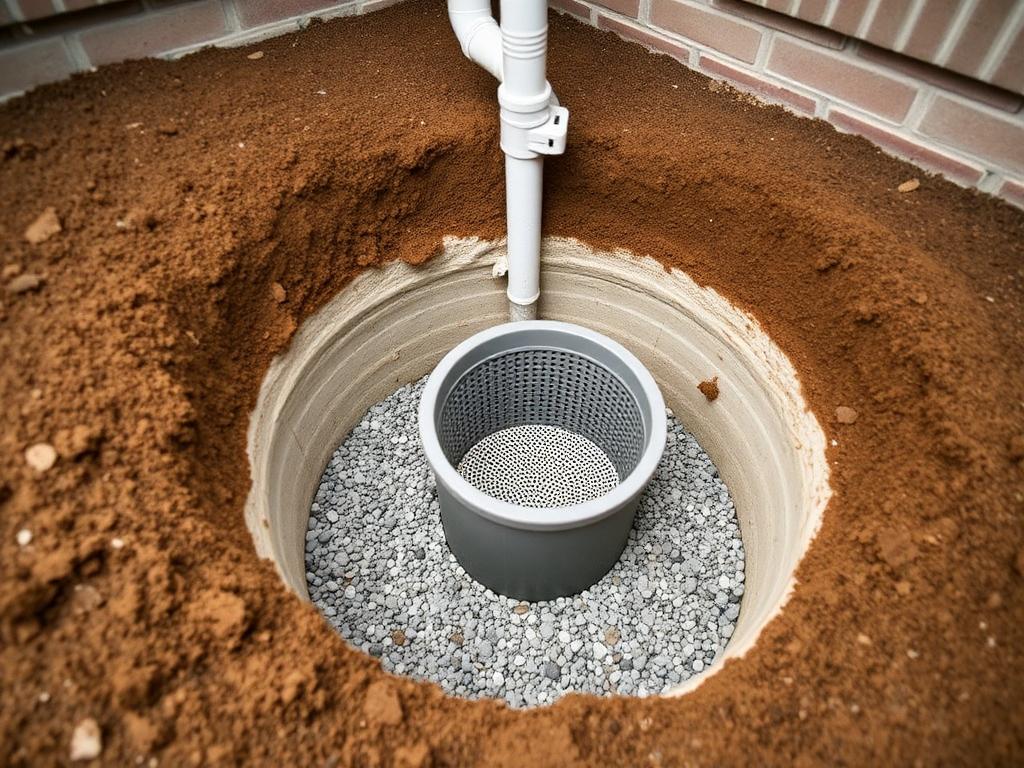
Dry wells
Best for: Downspouts, single problem spots, tight side yards
A deep gravel-and-basin pit that captures concentrated runoff — usually from a downspout or low corner — and lets it percolate down through the subsoil. Compact, hidden, and very effective on a localized issue.
Collector drain systems
Best for: Whole-property drainage, multiple downspouts, catch basins
A network of catch basins, channel drains, and solid pipe that gathers water from many points — gutters, yard low spots, patios — and carries it together to one engineered outlet. The right call when the problem is everywhere, not just one wet corner.
Why it matters
What you get when it's done right.
Dry foundations
Footing drains that pull groundwater off the slab before it wicks up walls.
Usable pasture
Surface swales that turn boggy low spots back into grazing acreage.
No callbacks
We size the pipe to a 25-year storm event, not a contractor's guess.
Driveway survival
Culverts sized and headwalled so the next gully-washer doesn't take your road out.
Our process
From first call to final walk-through.
Step 01
Site walk
Owner-operator on-site, laser level, mark outlet points, high spots, and downspout locations.
Step 02
System recommendation
We talk you through French drain vs. infiltrator vs. dry well vs. collector — and why one fits your site.
Step 03
Trench & install
Mini-ex or trencher with our crew. Fabric, gravel, perforated pipe, gravel, fabric, soil — or chambers / dry well as specified.
Step 04
Verify flow
We hose-test the outlet, walk the slope with you, and restore turf.
Straight answers
Drainage Systems questions we get asked.
How much does a drainage system cost?
It depends on how much water you're moving and how far it has to go. A single footing drain on a walkout basement is a very different number than a collector system across two acres. We walk the property, tell you what it actually needs, and put a firm number in writing. No surprise day rates — we back what we say in every estimate we issue.
How long does the work take?
Most residential drainage jobs in the Upstate run one to three days once we're on site. Larger collector systems, culvert crossings, or anything tied into a pond outfall can run a week or more. You get the schedule in the estimate, not after we start.
Do I need a permit for drainage work?
Simple yard drainage on private property usually doesn't. Anything that ties into a public storm system, crosses a right-of-way, touches a stream buffer, or moves enough dirt to trip a land-disturbance threshold does. We tell you which bucket your job falls in before we dig.
Can you work in the wet season?
Yes — winter and early spring are when drainage problems show themselves, so that's when we do a lot of it. Saturated ground changes how we stage equipment and haul spoil, and we schedule around the worst of it so we're not rutting your yard for no reason.
What do you need from me before you start?
Property lines if you know them, where your septic, irrigation, well lines, and invisible fence run, and access for equipment. We call in the public utility locate. Photos of where water stands after a hard rain help more than anything else you can send.
Will you fix a system somebody else installed?
Often, yes. A lot of failed drainage is the right idea installed wrong — no fabric, wrong stone, flat or reverse fall, fittings that silted shut. We'll scope it and tell you honestly whether it's a repair or a rebuild.