On a fresh-graded development site, bare soil is the single biggest liability. One real rain event and your sediment is in the neighbor's yard, the inspector is writing you up, and your topsoil — the expensive part — is halfway to the creek.
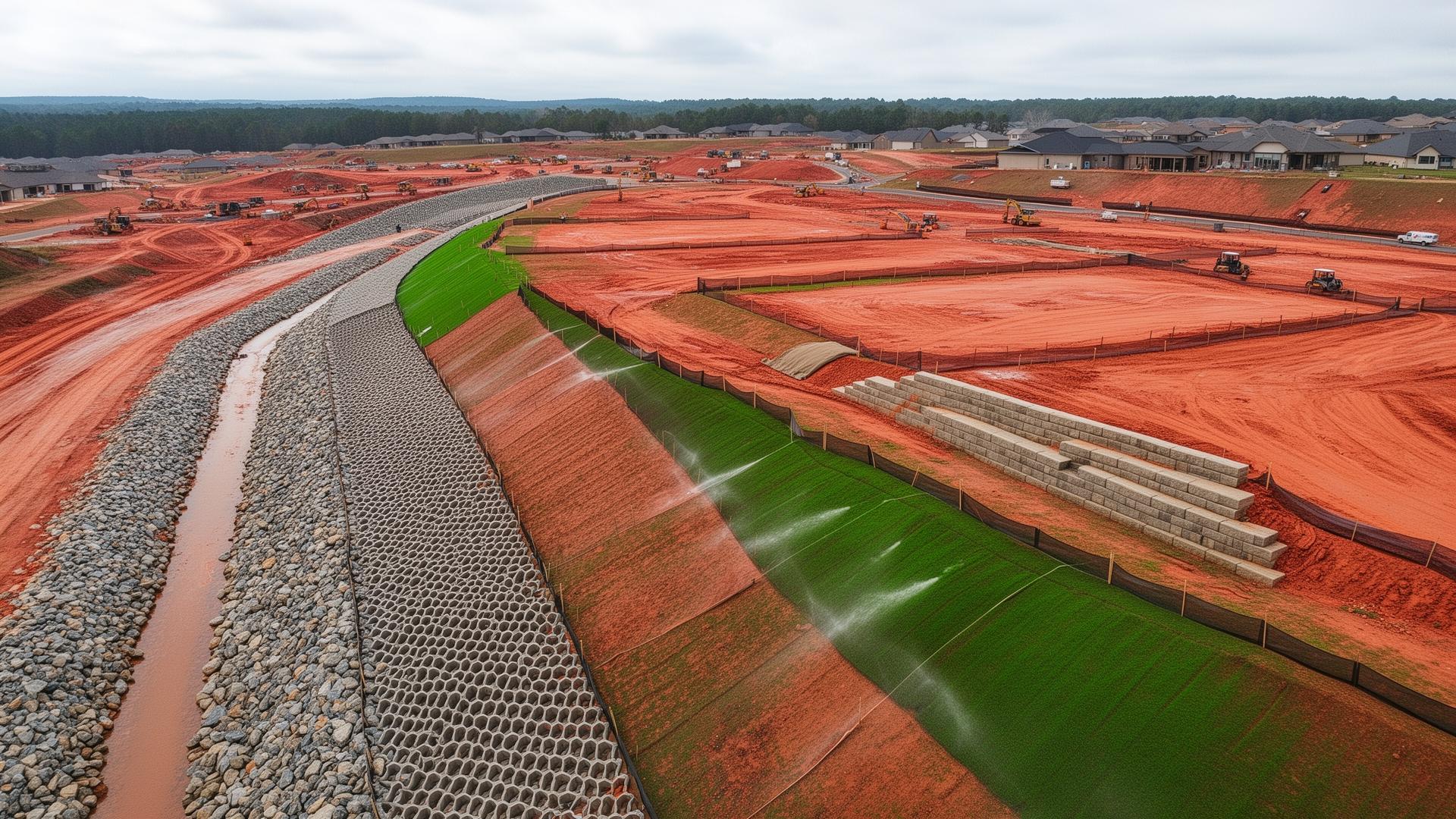
Erosion control isn't one product. It's a sequenced system: armor the places where concentrated water lands (rip rap), confine the slopes too steep to hold cover alone (geocell), build engineered walls where grade has to change in a short distance (segmental retaining walls), and lock the rest of the soil surface down fast with hydroseed and erosion blankets.
We install all four, in the right order, on residential developments, commercial pads, subdivisions, and post-grading sites. Permit-ready, NPDES-compliant, and built to actually work — not just check a box for the SWPPP binder.
Systems we install
Four erosion-control methods we install — and where each one belongs.
Not sure which one fits your property? That's our job. We walk the site with you, look at the soil and the slope, and recommend the system — or combination of systems — that actually solves the problem. No upsell, no guesswork.
Rip rap
Best for: Channel bottoms, pond outfalls, culvert ends, high-velocity discharge
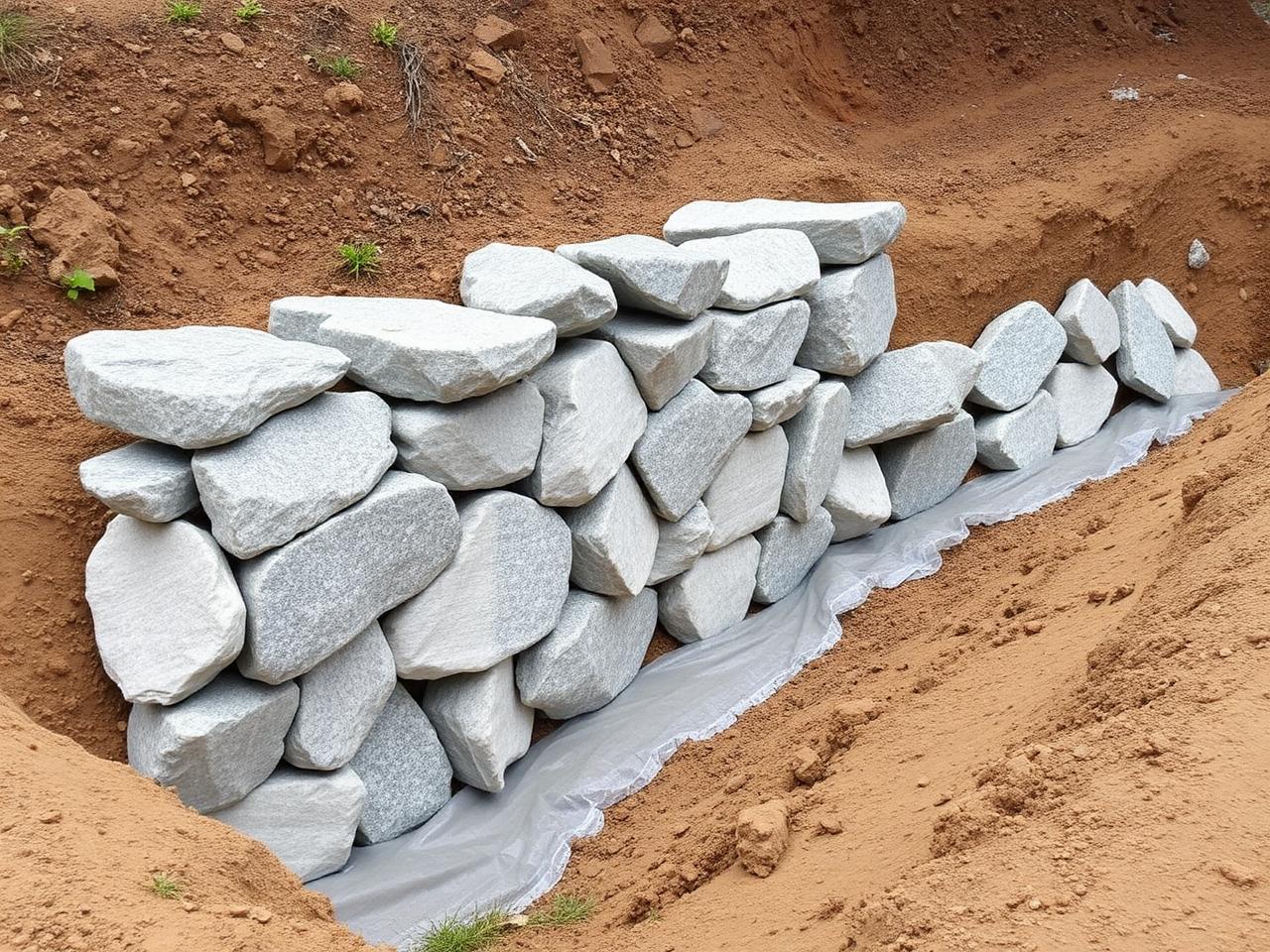
Angular granite stone — typically Class A, B, or 1 depending on flow — placed over a non-woven geotextile filter fabric. Dissipates the energy of moving water where it would otherwise scour soil out and undermine structures. We size the stone to the predicted velocity, not by eyeball.
Geocell stabilization
Best for: Slopes steeper than 2:1, channel linings, load-support over weak subgrade
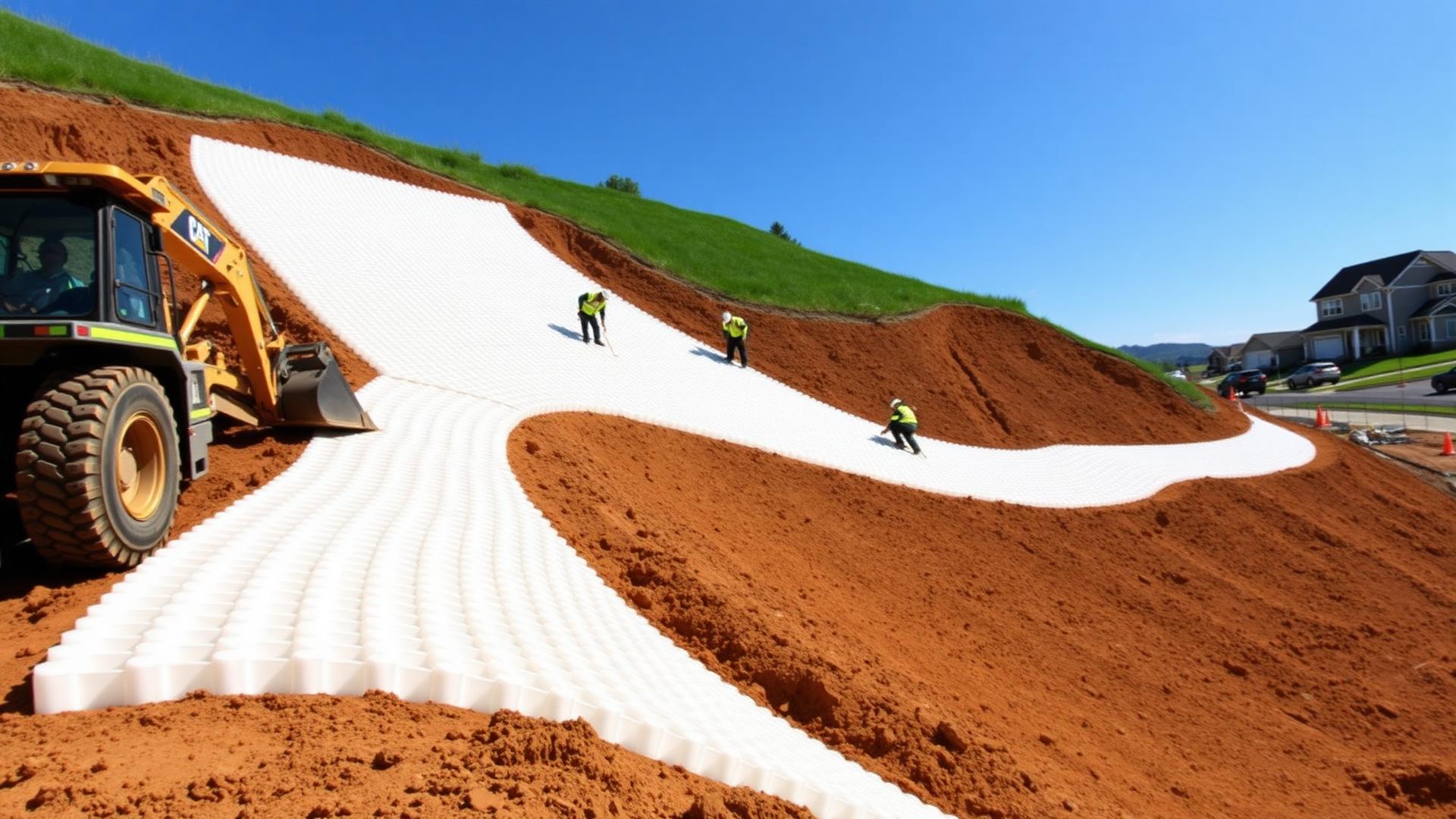
Expandable HDPE honeycomb panels anchored to the slope and infilled with gravel, sand, or topsoil. The cells confine the fill so gravity and water can't pull it downhill. Lets us vegetate slopes that would otherwise need a wall or a much flatter grade.
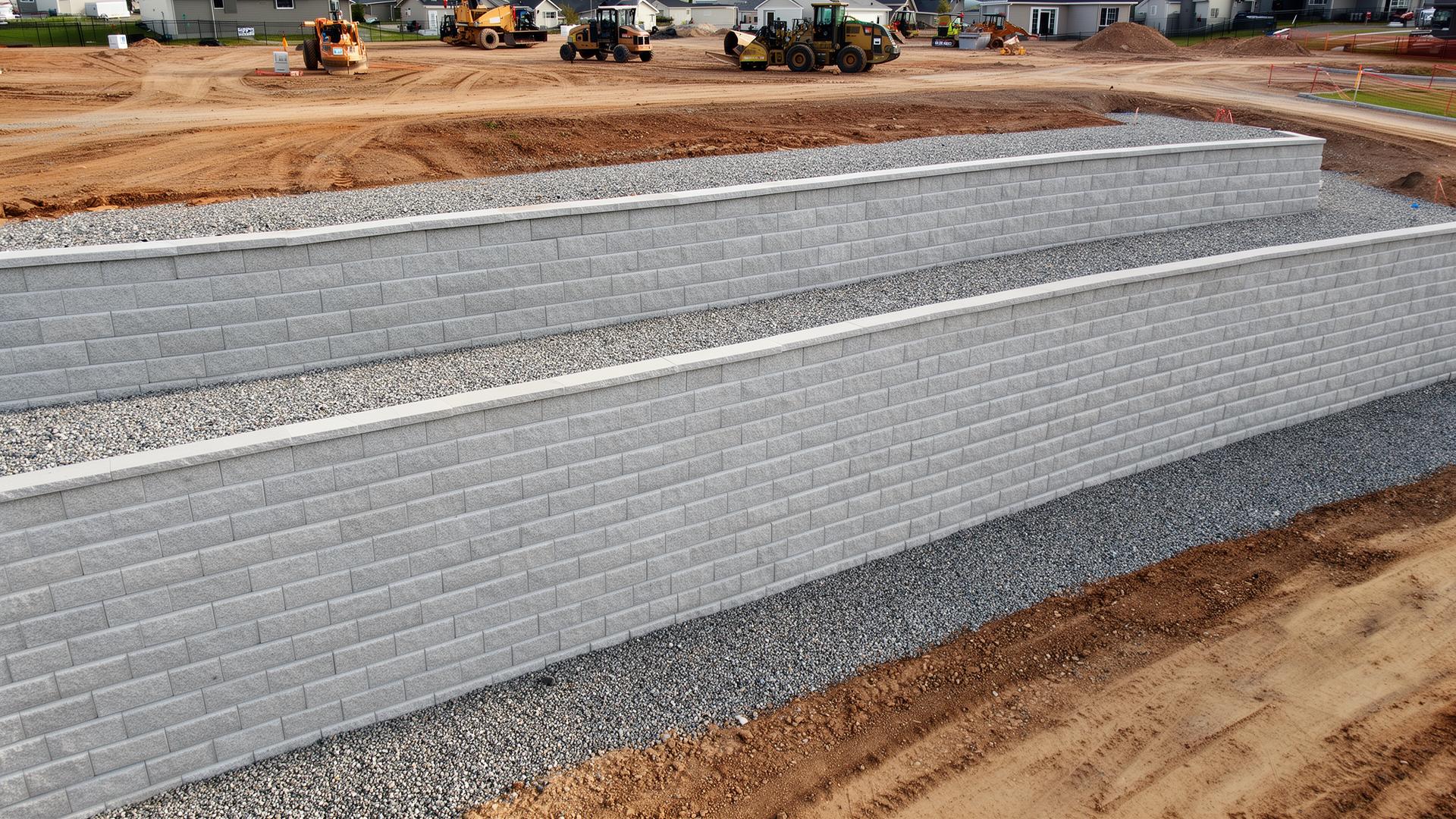
Engineered concrete-block walls with geogrid reinforcement extending back into the retained soil, drainage stone behind the block, and a compacted leveling pad below. Built to NCMA spec — walls past 4 ft get a stamped engineering design. They hold the grade for fifty years; they don't lean in five.
Hydroseeding
Best for: Large bare slopes, finish stabilization, fast green cover for inspection
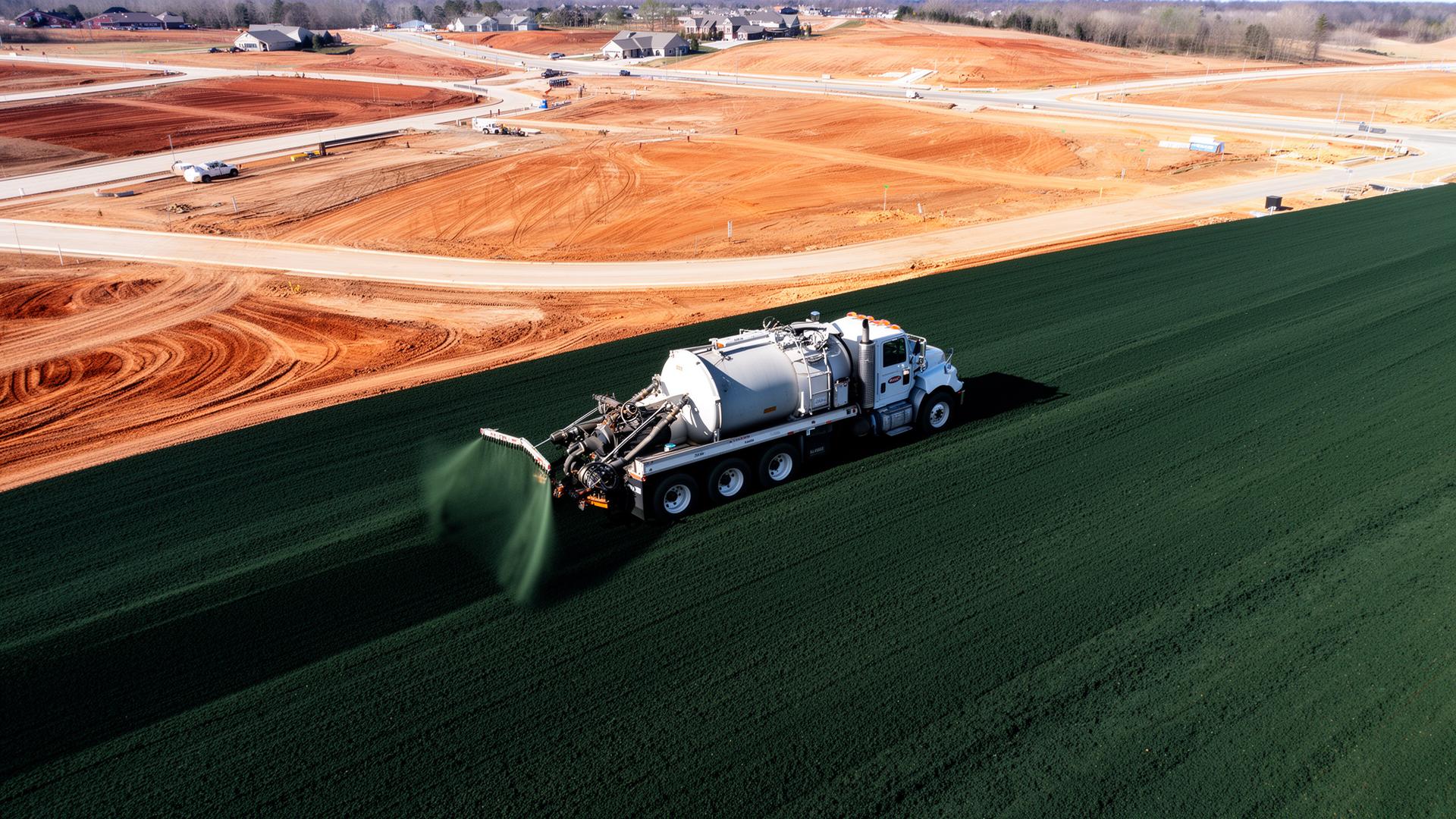
A pressure-sprayed slurry of seed, wood-fiber mulch, fertilizer, and tackifier laid down over freshly graded soil. Germinates faster and more evenly than dry seed, and the bonded mulch layer holds the surface together while roots establish. Add erosion-control blankets on the steeper runs.
Why it matters
What you get when it's done right.
Inspection-ready
NPDES / SWPPP-compliant install with photo documentation of every BMP we put in.
No washouts
Stone sized to flow, slopes confined where they need it, cover established before the next storm.
Engineered walls
Geogrid-reinforced segmental walls with stamped design past 4 ft — built to NCMA standards.
One crew, one schedule
Grade, armor, wall, and seed handled by us — no waiting on three subs to finish what the others started.
Our process
From first call to final walk-through.
Step 01
Site walk & plan review
Walk the graded site with you, review the SWPPP or stormwater plan, flag the high-velocity points and the slopes that need confinement.
Step 02
Layout & stake
Stake rip rap aprons, retaining wall alignments, and geocell zones. Confirm stone sizing, wall heights, and seed mix.
Step 03
Install in sequence
Walls and structural work first, rip rap at outfalls, geocell on steep slopes, then hydroseed everything that's still bare.
Step 04
Verify & document
Photo BMPs in place, walk the site with you and the inspector, hand over a clean punch list.
Straight answers
Erosion Control questions we get asked.
What does erosion control cost on a site like mine?
It depends which methods your slopes and outfalls actually need. Hydroseed over graded ground is one number; geocell on a 2:1 slope with riprap at the outfall and an engineered wall is another. We price off the stormwater plan and the site walk.
How fast can you get us inspection-ready?
Stabilization work is usually days, not weeks. Riprap and blankets go in immediately; hydroseed germinates in one to three weeks depending on temperature. Walls take longer because of geogrid and compaction sequencing.
Is a permit involved?
If you're on a development site you're already under a land-disturbance permit and a SWPPP, and the BMPs we install have to match it. Retaining walls past four feet typically need a stamped engineering design. We build to those documents.
Can you stabilize during the rainy season?
Yes — that's when it matters most. Riprap, blankets, and geocell can go in on wet ground. Hydroseed needs a window to germinate, so in a cold, wet stretch we lead with blankets and mulch and come back with seed.
What do you need from me?
The SWPPP or stormwater plan, current grading status, inspection dates you're working against, and site access. If grading isn't finished, tell us the schedule so we're not stabilizing ground that's about to move again.
Do you document the BMPs for the inspector?
Yes. We photograph every BMP as it goes in and hand that documentation over, so your binder matches what's actually on the ground.